Rick Rubin's The Creative Act Is a Devotional Disguised as a Book About Creativity
TL;DR
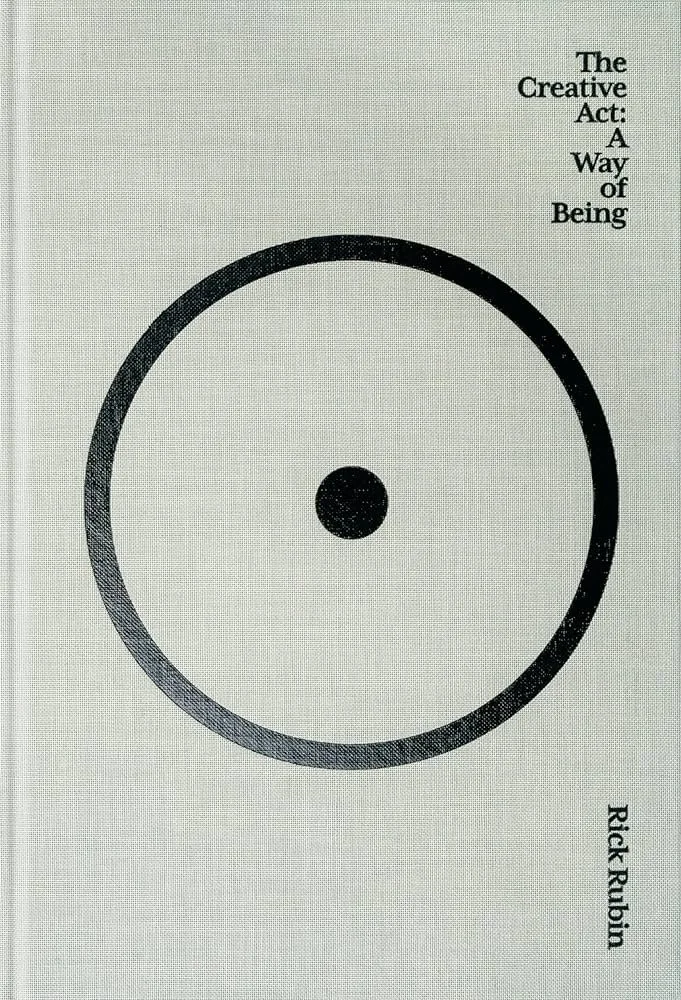
Book:The Creative Act: A Way of Being
Author: Rick Rubin
Rating: 5.4 / 10
In one sentence: The Creative Act reads more like scripture than instruction manual, offering genuine wisdom about the creative process buried beneath layers of ethereal platitudes that will either feel profound or frustratingly shallow depending on where you are in your own creative journey.
Worth the read? Yes. If you approach it as a daily devotional (15 minutes at a time, with a highlighter and space to reflect), it delivers. If you are looking for a practical guide to getting better at your craft, you will leave hungry.
The Review
I started reading The Creative Act expecting something different. Rick Rubin has produced records for Johnny Cash, the Beastie Boys, Adele, and dozens of others across genres that should not coexist on the same resume. That track record suggested a book with real weight, something that might decode what actually happens in a room when creative work gets made.
The book delivers something else entirely. Rubin writes about creativity the way someone might write about God: circling the ineffable, gesturing toward truths that resist direct articulation. Some days this landed. Other days it felt like fortune cookie wisdom stretched across 400 pages.

The structure contributes to this uneven experience. There is no conventional narrative arc, no progression from novice to master, no satisfying build toward a unified theory. Rubin riffs on the same themes repeatedly, approaching patience or play or surrender from slightly different angles each time. It spirals. Whether that spiral illuminates or irritates depends on the day.
Buried in the ethereal language are ideas that, at least for me, stuck.
His framework of creative phases (Seed, Experimentation, Craft, Completion) gave language for something experienced and hard to articulate: the way different stages of a project require fundamentally different kinds of attention.
And then there is this: "If you have truly created an innovative work, it is likely to alienate as many people as it attracts."
That is a helpful corrective when you are worried about universal approval. It reframes rejection as evidence you might actually be doing something interesting.
The writing itself is the book's most polarizing element. Rubin writes with deliberate emotional distance, rarely sharing personal anecdotes or naming the artists he has worked with. This detachment creates space for readers to project their own experience onto his ideas. It also makes the book feel untethered, wisdom floating free of the credibility that concrete stories would provide. The man has produced some of the most consequential records in modern music. He chose to leave almost all of that experience off the page. That decision cost the book something it could not afford to lose.
Rubin frames creativity broadly enough that the same ideas apply whether you are writing songs, starting a company, or working through a difficult relationship. That breadth is both strength and weakness. It makes the book universally accessible. It also means he never goes deep enough on any single discipline to offer real tactical guidance.
Reading The Creative Act 15 minutes at a time over several months turned out to be the right approach. The book rewards slow absorption the way a religious text might, returning to familiar passages and finding new meaning as circumstances change. Read it in a weekend and it collapses into repetitive platitudes. Read it as a practice and something different emerges.
Would I recommend it? To someone starting their creative journey or needing encouragement to keep going, yes. To experienced practitioners looking for tactical depth, probably not. The book is best understood as a devotional for people who already believe in the spiritual dimension of creative work. If that is you, keep it on your shelf. Return to it when you need reminding that the practice matters more than the product.
The Scorecard
I score every book I review against a weighted rubric. The criteria stay consistent. The scores don't.
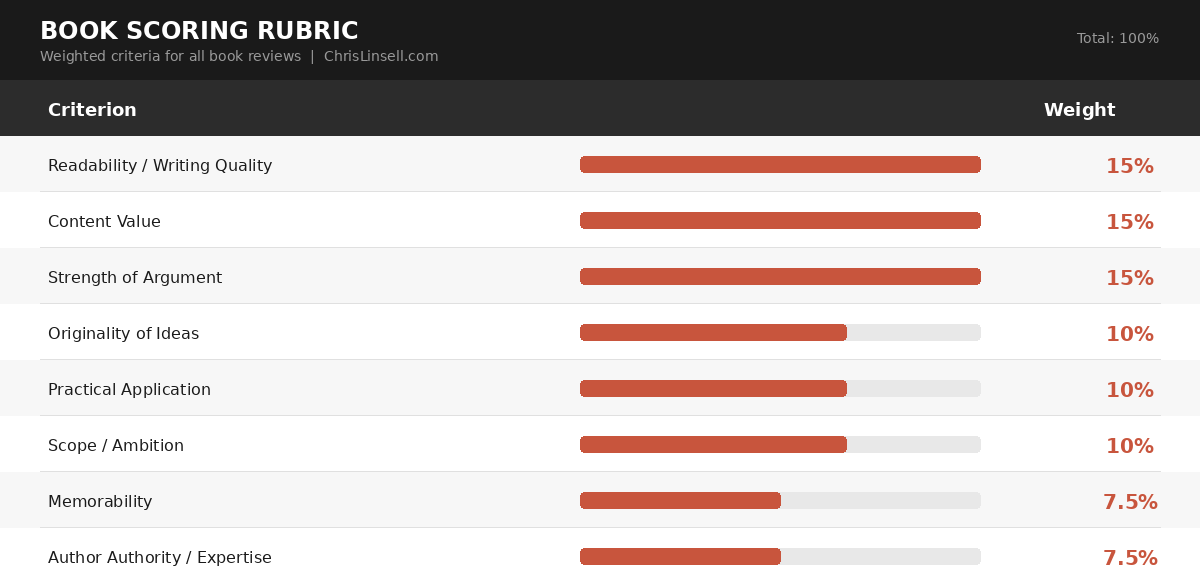
Here's how The Creative Act landed.
Overall Score: 5.4 / 10
Readability (6/10): The notes split on this consistently. Some sessions the prose landed as insightful; others felt like fortune cookie advice written lazily. The deliberate emotional distance and lack of narrative arc made the experience uneven across months of reading.
Content Value (6/10): Real moments of value appeared: the seed-to-completion creative phases gave useful language, and the "best art divides the audience" passage hit hard. Multiple sessions noted it was unlikely to have a primary, lasting effect, and some chapters couldn't be recalled shortly after reading them.
Strength of Argument (5/10): The book resists argument by design. It is aphoristic rather than argumentative. The deliberate detachment from concrete examples makes the reasoning feel untethered. Scored at midpoint because this is a structural choice, not a failure of execution.
Originality (6/10): The individual ideas were not new, but the creative framework (seed, experimentation, craft, completion) was a useful organizational contribution. The art-versus-commerce distinction and the storm-chaser metaphor were genuinely memorable framings.
Practical Application (5/10): Multiple sessions produced no clear action or application takeaway. The book was not intended as a tactical guide, and the notes confirm it. Moments of personal applicability appeared around the craft phase and momentum, but they were the exception.
Scope / Ambition (7/10): The ambition is real. Rubin attempted to describe the nature of creativity itself in a way that applies universally. That is an enormous swing, and it earns credit even where the execution fell short.
Memorability (7/10): Despite the unevenness, several ideas lodged: "the home built hastily rarely survives the first storm," the alienation-as-evidence framing, the art-is-practice thesis, and the preparation-versus-storm-chasing distinction. These appeared across months of notes.
Author Authority (7/10): Rubin's authority comes from his track record, which is undeniable. The lack of named artists or personal anecdotes weakened the credibility his experience should have provided. This was a stylistic choice rather than a gap in expertise. It was still a costly one.
The Bottom Line
A 5.4 puts The Creative Act in mixed territory. That is exactly where the reading experience landed. The book was not without value; months of slow, devotional-style consumption unlocked something the book could not deliver at speed. Real ideas emerged across sessions. A few of them stayed.
The problem is what Rubin chose to leave out. He has spent decades in rooms where creative work happens at the highest level. He chose to write about creativity in the abstract, stripped of the specific and the personal, as if naming the artists or describing the actual moments would somehow diminish the universal truth he was reaching for. The opposite is true. The specific is what makes the universal land.
This is a book worth owning. It is not a book worth reading conventionally.